

 English
 Español
 عربى
The company adhering to the "customer first and forge ahead" business philosophy, adhere to provide our customers with quality service.
What Muscles Does a Weighted Jump Rope Work? A Complete Muscle-by-Muscle Guide
What Muscles Does a Weighted Jump Rope Work?
A heavier rope does not simply make skipping harder. It moves the load out of your wrists and into your shoulders, and it changes what your legs have to do on every landing. Here is the anatomy, in the order you will feel it.
Hand a speed rope to someone who trains only with speed ropes, then swap it for one with half-kilo handles. Within thirty seconds the tempo drops from roughly 180 revolutions per minute to somewhere between 100 and 130, the arms stop flicking from the wrist and start circling from the shoulder, and the next day the soreness has moved to entirely different places. None of that is random. Added mass changes which muscles can carry the work, and it behaves the same way for a beginner and for a competitive athlete.
The Short Answer: One Chain, Many Muscles
A weighted jump rope works your calves and ankles, quadriceps, hamstrings, glutes, hip flexors, inner-thigh adductors, core, spinal erectors, all three heads of the deltoid, the rotator cuff, biceps, triceps, forearms, grip, and the upper-back muscles that control the shoulder blades.
The one line worth remembering: extra weight shifts the emphasis upward. Your legs still do all of the jumping, but your shoulders, arms and grip take on a much larger share of the work than they do with a thin cable.
- Calves and ankles — push-off and landing absorption, repeated on every single turn of the rope.
- Quadriceps and glutes — knee and hip extension, plus control of each landing.
- Hip flexors and adductors — knee lift, and the leg crossing used in side swings and criss-crosses.
- Core and lower back — resisting rotation so the torso stays tall while the rope spins.
- Shoulders and upper back — driving the handle circle. This is where the added mass actually lives.
- Arms, wrists and grip — holding the handles and keeping the wrists turning when they want to stall.
Why Added Weight Rewrites the Muscle Map
Two pieces of mechanics explain almost everything you feel in the first month.
- Torque depends on distance from the shoulder, not on total weight. The handles travel a circle roughly a metre in diameter around the shoulder joint, while the cord spins very close to the body. Weight placed in the handles therefore costs far more torque per revolution than the same weight added to the cord, which is why a rope with heavy handles feels harder than one with a slightly thicker cable.
- Tempo decides time under tension. A weighted rope settles at roughly 100 to 130 revolutions per minute against 160 to 200 for a speed rope. Slower revolutions mean longer ground contact on every jump, a longer shoulder load in every rotation, and far less reliance on the elastic recoil of the Achilles tendon. Your calves have to produce force instead of simply bouncing.
There is a technique consequence as well. A light rope can be turned almost entirely from the wrist, which trains very little of the shoulder. A heavy rope will not let that habit survive: you cannot flick a half-kilo handle, so the whole arm has to circle. Athletes moving from speed work to weighted work often describe the first sessions as starting over, and that description is accurate, because the pattern switches from wrist-dominant to shoulder-dominant.
Muscle by Muscle: What Each Region Actually Does
The table below maps the main contributors, their job during a set, and how the added weight changes the demand on each of them.
| Region | Main muscles | Job during the set | What added weight changes |
|---|---|---|---|
| Calves and ankles | Gastrocnemius, soleus, tibialis anterior | Push-off and shock absorption | Longer contact per jump, higher cumulative load |
| Quadriceps and glutes | Vastus group, gluteus maximus and medius | Knee and hip extension, pelvis stability | More eccentric work on every landing |
| Hip flexors and inner thigh | Iliopsoas, rectus femoris, gracilis | Knee lift, leg crossing in side swings | Larger lift per repetition at a slower tempo |
| Core and lower back | Rectus abdominis, obliques, deep abdominals, erector spinae | Anti-rotation, keeping the torso vertical | More rotational force to resist each turn |
| Shoulders and upper back | Deltoids, rotator cuff, trapezius, rhomboids, latissimus dorsi | Driving the handle circle, scapular control | The single largest change; mass sits at arm's length |
| Arms, wrists and grip | Biceps, triceps, wrist flexors and extensors | Elbow and wrist rotation, holding the handles | Sustained isometric grip work, earlier fatigue |
Shoulders, Arms and Grip: Where You Notice It First
Ask anyone who has just swapped ropes where they feel it, and they will point at the shoulders and forearms. The anterior deltoid lifts the handle, the posterior deltoid and rotator cuff control the follow-through, and the trapezius and rhomboids keep the shoulder blade stable while the cycle repeats fifty to sixty times a minute. Across a twenty-minute session, that is well over a thousand controlled shoulder rotations with a load on the end of a lever the length of your arm.
The rope is the load; the handle is the interface. A grip that is too thin or too smooth for a heavier rope turns a shoulder exercise into a forearm failure test within two minutes.
Handle weight is not cord weight
Handle material and grip diameter decide how much of that load your hands can actually tolerate. Rubber and foam absorb sweat and offer a larger contact surface, which starts to matter as soon as the rope is heavy enough to pull against your grip. If you are matching a rope to heavier training rather than to speed work, this guide on how to choose the right handle for heavier sessions covers the trade-offs between grip thickness, handle length and cord attachment.
For buyers sourcing in volume, handle geometry, cord construction and surface finish are locked in at the mould and assembly stage, so decisions taken during professional jump rope manufacturing determine how the finished rope behaves in a customer's hands months later.
Core, Hips and Lower Body: The Half Most People Underrate
The hip flexors do far more work than most people expect, because knee lift now happens against gravity at a slower, more deliberate tempo. The adductors join in during side swings, criss-crosses and any movement where the legs cross the midline.
The anti-rotation job
Watch a beginner with a heavy rope and you will see the hips twisting slightly with each arm circle. The obliques, rectus abdominis, deep abdominal wall and spinal erectors are what stop that twist, and they work isometrically for the whole set. With a speed rope the arm circle is small enough that the demand is nearly invisible. With a weighted rope it becomes a genuine core exercise.
On the landing side, longer ground contact means the quadriceps and the soleus absorb load for longer on every jump, while the tibialis anterior works harder to clear the toes. That is also why shin and ankle complaints show up faster with a heavy rope than with a speed rope.
Watch the tendons, not just the muscles
Weighted rope work increases time under load on the Achilles tendon, the plantar fascia and the shin. Build handle weight in 0.25 kg steps instead of jumping straight to a heavy rope, keep individual sets short, and avoid long unbroken efforts on concrete or tile.
Choosing Weight and Programming Around It
Handle weight is the variable that matters most, because it sits furthest from the joint. A practical working range runs from about 0.25 kg to 1.5 kg per handle; beyond that you are using a strength tool rather than a conditioning tool. Cord weight is secondary, useful for adjusting rhythm more than for adjusting load.
A four-week progression that holds up
- Weeks 1 and 2: two sessions a week, six rounds of 60 seconds with 45 seconds of rest, at a handle weight you can turn smoothly for the full round.
- Weeks 3 and 4: extend intervals to 90 seconds and cut rest to 30 seconds before you touch the weight again.
- Reset: add 0.25 kg per handle, drop back to 45-second intervals, and rebuild toward 90 seconds over the next two weeks.
- Keep one lighter session each week for speed and rhythm, because weighted work alone will slow your turnover.
A quick self-check
If your grip fails before your shoulders do, the rope is too heavy or the handle is too thin. If your shoulders burn evenly and your hands hold up, the weight is doing its job.
Volume discipline matters more than weight. Ten to fifteen minutes of quality weighted work is a serious stimulus; thirty minutes of sloppy heavy-rope work mostly produces fatigue and poor landings. End a set when the rhythm breaks, not when the timer says so.
The Bottom Line
A weighted jump rope trains nearly everything a speed rope trains, plus a great deal more of the upper body: deltoids, rotator cuff, upper back, biceps, triceps, forearms and grip, with the core working harder to resist rotation and the calves and quadriceps absorbing a slower, longer landing.
The practical conclusion: choose handle weight first and cord weight second, keep sessions short, and treat the weighted rope as a complement to speed work rather than a replacement for it. Used that way, it fills the gaps that a thin cable leaves open — the shoulders, the grip, and the postural muscles that keep a jump rope session looking controlled from the first minute to the last.
Related Product
-
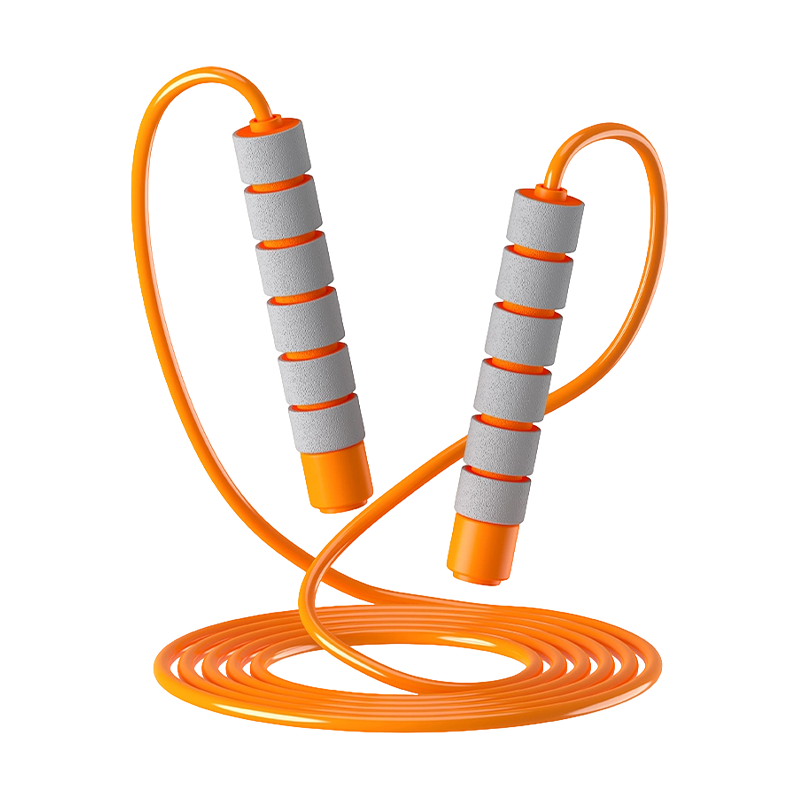
TS-1 PVC Rope Sponge Handle Jump Rope For Children
-
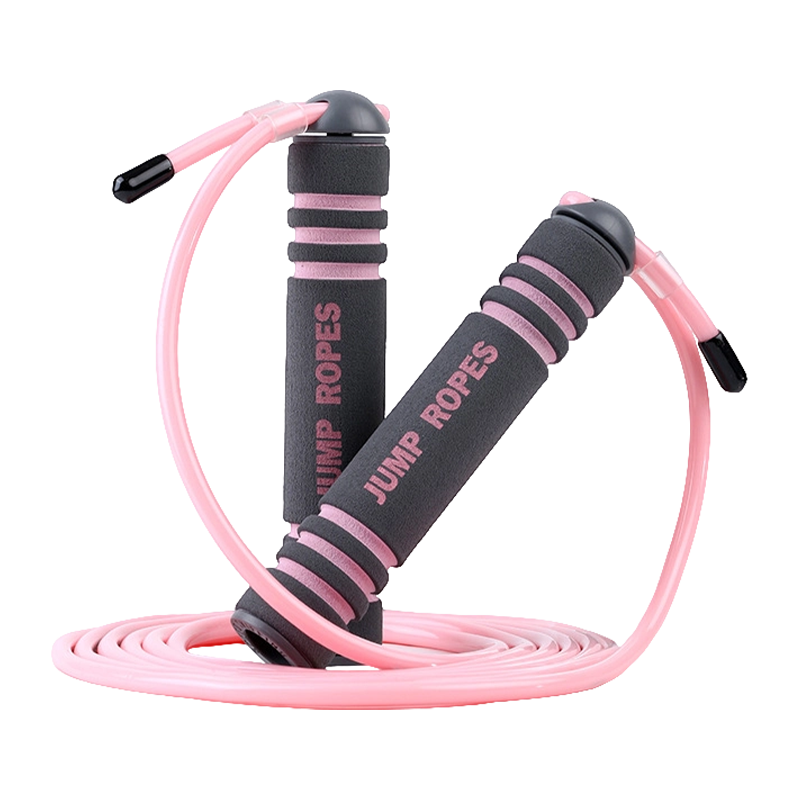
S-17 Sponge Handle Jump Rope For Children
-
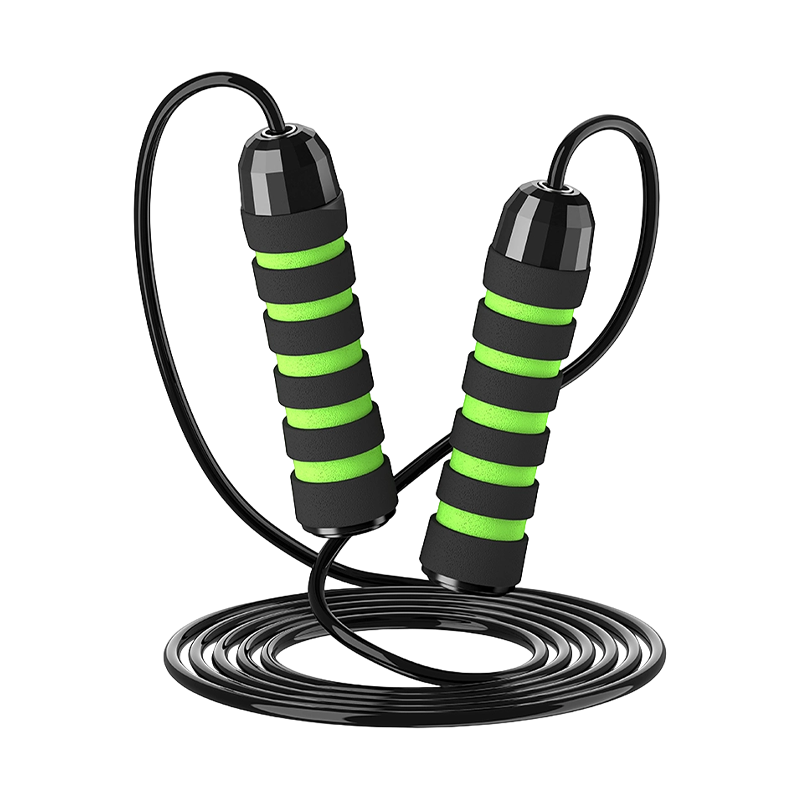
TS-2 5 Slots Sponge Handle Jump Rope For Adults
-
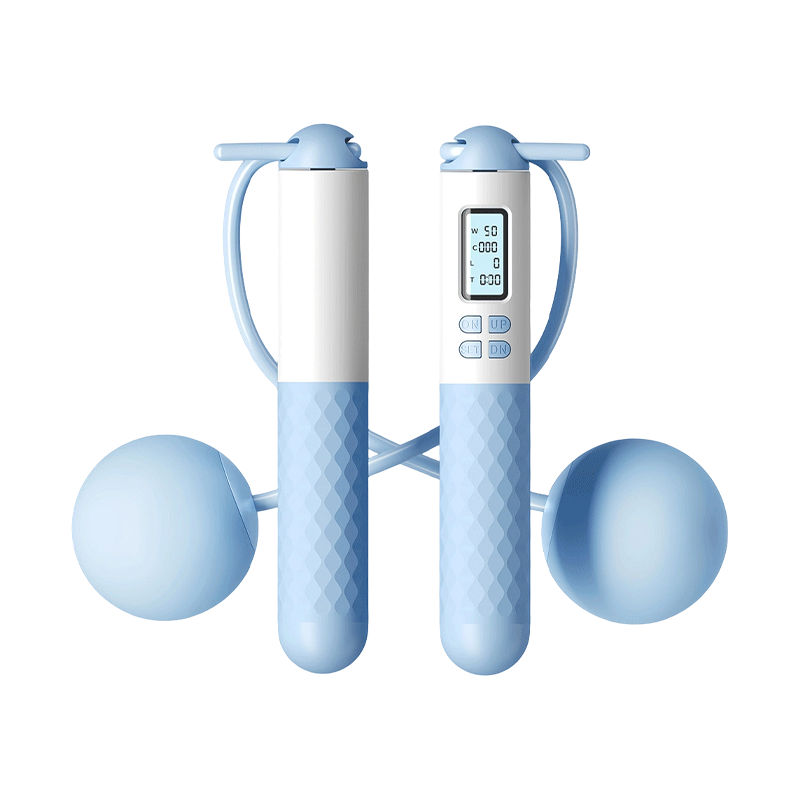
TS-7 ABS Handle Electronic Counting Jump Rope
-
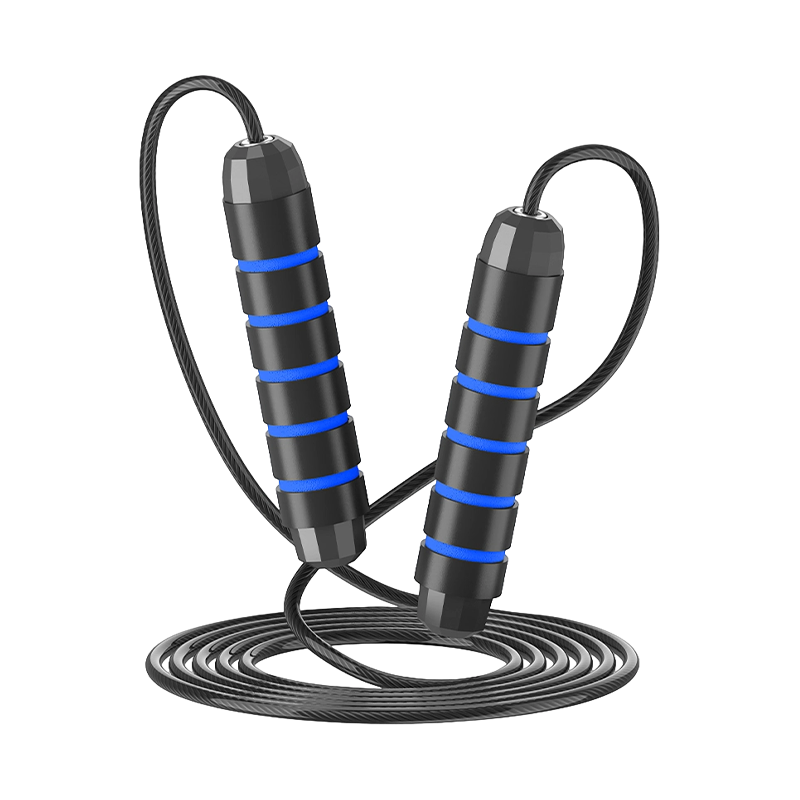
TS-3 Five-Slot Smooth Sponge Handle Jump Rope For Adults
-
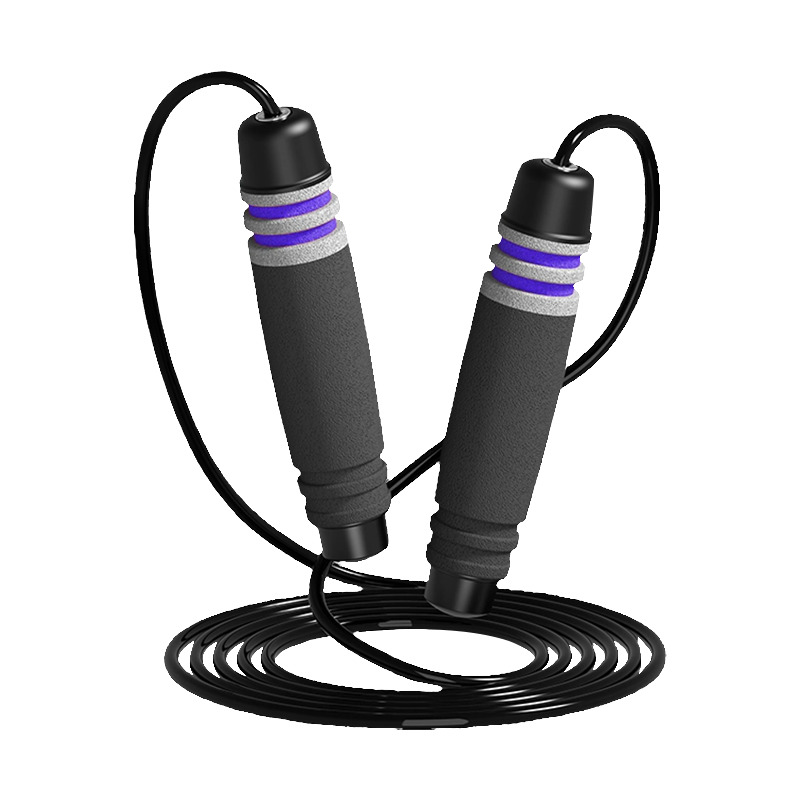
TS-3 Single Head Color/7 Groove Drum Shape Sponge Handle Jump Rope For Adults
News
-
Introduction to Racing Jump Ropes The humble jump rope, once a staple of playground nostalgia and simple cardiovascular warm-ups, has undergone a radical transformation in the mode...
READ MORE -
Discover the Power of Racing Jump Ropes Racing Jump Ropes: Defining the Speed Tool Racing Jump Ropes, often referred to as Speed Ropes, are high-performance fitness tools specifica...
READ MORE -
Introduction Jump rope workouts have long been a staple in fitness routines due to their simplicity and effectiveness. However, with the advent of technology, counting jump ropes h...
READ MORE -
Understanding the Benefits of Rubber Handle Jump Rope for Different Fitness Levels Jump rope is a simple yet highly effective fitness tool that has been gaining popularity in both ...
READ MORE

Contact Us
-

No. 215, Lane 4, Qiaotou Road, Qiaotou Town, Cixi City, Ningbo, Zhejiang Province, China.
-

+86-13867815229
-

Copyright © Cixi Lingdong Electronic Technology Co., Ltd. ALL rights reserved

UP