

 English
 Español
 عربى
The company adhering to the "customer first and forge ahead" business philosophy, adhere to provide our customers with quality service.
Weighted Jump Rope for Beginners: How to Choose the Right Weight and Rope
Weighted Jump Rope for Beginners: Start Light, Then Add Load
Most beginners do not need a heavier rope. They need a lighter one they can turn with their wrists for a full minute, cut to their own height, and fitted with a handle that swivels.
Picture the first session with the wrong rope. You unbox a two-pound model, jump for forty seconds, and your forearms lock up. Your elbows drift away from your ribs, you jump four inches off the floor instead of one, and the cord catches your shins. Nothing here is a fitness problem. It is a weight problem.
The practical answer comes first: for a first weighted rope, look for 0.5 lb (about 227 g) to 1 lb (about 454 g) of total weight, a PVC cord around 6 to 8 mm, an adjustable length, and a handle with a bearing swivel. Ropes at 1.5 lb and above are a second purchase, not a starting point.
What Changes When the Rope Carries Weight
A weighted rope turns slower, and that single fact drives everything else about how it feels.
- Feedback. You can feel the cord pass under your feet, which helps beginners find rhythm without staring at the floor.
- Tempo. A slow rope keeps you honest. You cannot rush the turn, so you stop jumping too high and stop landing flat-footed.
- Muscle work. Heavier cords add shoulder, forearm, and grip demand, which is why weighted models dominate fat-burning and conditioning circuits.
- Fatigue. The same weight that adds feedback drains your grip inside a minute if the rope is too heavy for your level.
Where the weight sits matters as much as how much there is. Heavy handles keep a fast, tight rotation but punish the grip. A heavy cord, or a cord with a weight sleeve, rotates slowly and pushes the work into the shoulders and upper back. Beginners usually do better with cord weight, because a slower arc is easier to read and time.
If you cannot turn the rope with your wrists for a full minute, the rope is heavier than your technique can carry. Drop a weight band before you drop the habit.
Matching Rope Weight to the Jumper
Weight bands are not marketing labels. Each one changes who finishes a workout and who quits at the two-minute mark.
| Rope weight | Best suited to | How it turns | Main risk |
|---|---|---|---|
| 0.25 to 0.5 lb | Children, absolute beginners, adults returning to training | Fast, close to a speed rope | Little feedback; easy to rush the tempo |
| 0.5 to 1 lb | Most adult beginners, general fitness, warm-ups | Steady and easy to feel | Grip fatigue if you squeeze the handles |
| 1 to 1.5 lb | Beginners with a strength background, short conditioning blocks | Noticeably slow | Elbows drift outward; shoulders load early |
| 2 lb and up | Experienced jumpers, loaded conditioning | Very slow and deliberate | Calf and Achilles overload in the first weeks |
A simple filter works in practice. If you have not jumped rope regularly in the past year, start at 0.5 to 0.75 lb. If you train with weights three or more times a week, 1 lb is reasonable. Children, and anyone under about 45 kg, should stay at or below 0.5 lb, where the goal is learning the turn rather than building load.
The TS48 weighted fat-burning rope sits inside that beginner band and is built for short, repeatable conditioning sets rather than long steady sessions.
Handle, Cord, and Length: The Details Beginners Notice Late
Cord diameter and material
Beginners rarely think about cord diameter, then wonder why the rope stings. A 6 to 8 mm PVC cord is the usual choice for weighted beginner work: heavy enough to feel, soft enough that a mistimed landing leaves a bruise rather than a welt. Coated steel cables of 2.5 to 3 mm belong to speed training, and anything above 8 mm needs more floor clearance than a low-ceilinged room offers.
Handle diameter and grip
Handle diameter between roughly 26 and 32 mm fits most adult hands, while children do better under 28 mm. Sponge and foam handles stay put when palms get sweaty, which is why they dominate beginner and school ranges. Rubber gives a firmer bite and holds position during fast sets, at the cost of some chafing over long sessions. Grip is usually the first thing to fail in a beginner's set, so handle choice is not cosmetic.
For the firmer feel without added load, a weighted rubber-handle rope sized with smaller hands in mind is a sensible middle option.
Length and the swivel
Stand on the middle of the cord and pull the handles up. For a beginner, the handle tops should land between the lower chest and the armpit. Slightly long is safer than slightly short, because a short rope forces a higher jump and a faster turn before your technique can support either. Then check the swivel: the cord should spin freely inside the handle through a full 360 degrees. A stiff swivel twists the cord, and a twisted cord catches your feet no matter how well you jump.
A Four-Week On-Ramp
The goal of the first month is tendon tolerance, not calories. Calves and Achilles tendons adapt more slowly than lungs and heart, so this schedule stays deliberately conservative.
- Week 1. Six rounds of 30 seconds on, 45 seconds off, three sessions. Stop each round while you still feel fresh.
- Week 2. Eight rounds of 40 seconds on, 40 seconds off, still three sessions.
- Week 3. Six rounds of 60 seconds on, 45 seconds off. Add a fourth session if the calves feel fine the next day.
- Week 4. Five rounds of 90 seconds on, 60 seconds off, with the heavier rope used for two or three rounds only.
Warning: calf tightness in the first two weeks is normal; sharp pain along the tendon, or pain that persists the next morning, is not. Cut volume by a third and recheck your surface and footwear before adding weight.
Keeping a count helps more than it sounds. Rounds that feel identical often differ by twenty or thirty turns, and that gap is where progress hides. Mechanical counters in the handle are the simplest option, while electronic models add timers and calorie estimates; this breakdown of counting jump ropes explains which numbers are worth trusting.
Once 90 seconds feels controlled with a light rope, a heavier second rope earns its place. The TS56 upgrade weight-bearing rope is built for those loaded 30 to 45 second blocks.
Ready for more weight when: you can turn the rope with your wrists, not your shoulders, for 90 seconds and your jump height stays under about two inches. If either breaks down, hold the current weight for another two weeks.
Mistakes That Appear in the First Month
Almost every beginner problem traces back to one of these causes, and each one is cheap to fix.
- Starting too heavy. A 2 lb rope in week one turns a ten-minute habit into a three-minute struggle.
- Turning with the arms. Big arm circles burn the shoulders. The turn comes from the wrists, elbows close to the ribs.
- Jumping too high. One to two inches of clearance is enough; anything more multiplies landing force on every rep.
- Ignoring the surface. Thirty minutes a day on concrete is a fast route to shin and heel pain. Wood, rubber, or a sports court is kinder.
- Rushing the timeline. Daily jumping for two weeks followed by a month off beats nothing, but it loses to three sessions a week for six weeks.
Danger sign: pain that is sharp, one-sided, or worse the next morning is a stop signal, not a challenge. Weighted work multiplies load, and tendons do not negotiate.
Before You Buy: A Short Checklist
Four or five details decide whether a beginner rope survives the first month.
- Total weight of 0.5 to 1 lb for adults, at or below 0.5 lb for children.
- Adjustable length covering roughly 2.4 to 3 m of cord, so the rope grows with the jumper.
- A bearing swivel that turns a full 360 degrees without catching.
- Handle diameter of 26 to 32 mm in a material that keeps its grip when wet.
- Cord diameter of 6 to 8 mm for weighted beginner work.
Info: weight is a total, not a headline. A rope sold as "1 lb" may count handles only, cord only, or both. Ask, or weigh the rope yourself, before comparing two products.
Buyers sourcing for schools, clubs, or retail lines check the same list from the other side. Consistent length hardware, even grip finishing batch to batch, and a swivel that survives thousands of rotations matter more than one good sample. Ropes built in-house, from mold making and injection molding through assembly and surface printing, are easier to keep consistent at volume, and a training jump rope range that already spans light beginner models through loaded conditioning ropes removes most of the guesswork from a mixed order.
The Short Version
For a beginner, the right weighted rope is the lightest one that gives useful feedback: 0.5 to 1 lb for adults, cord weight rather than heavy handles, a bearing swivel, and a length that reaches from the lower chest to the armpit. Train three times a week, keep the rounds short, and add weight only after 90 seconds feels controlled. A heavy rope is a tool you earn, not a shortcut you buy, and the beginner who starts at 0.5 lb is usually the one still jumping in month six.
Related Product
-
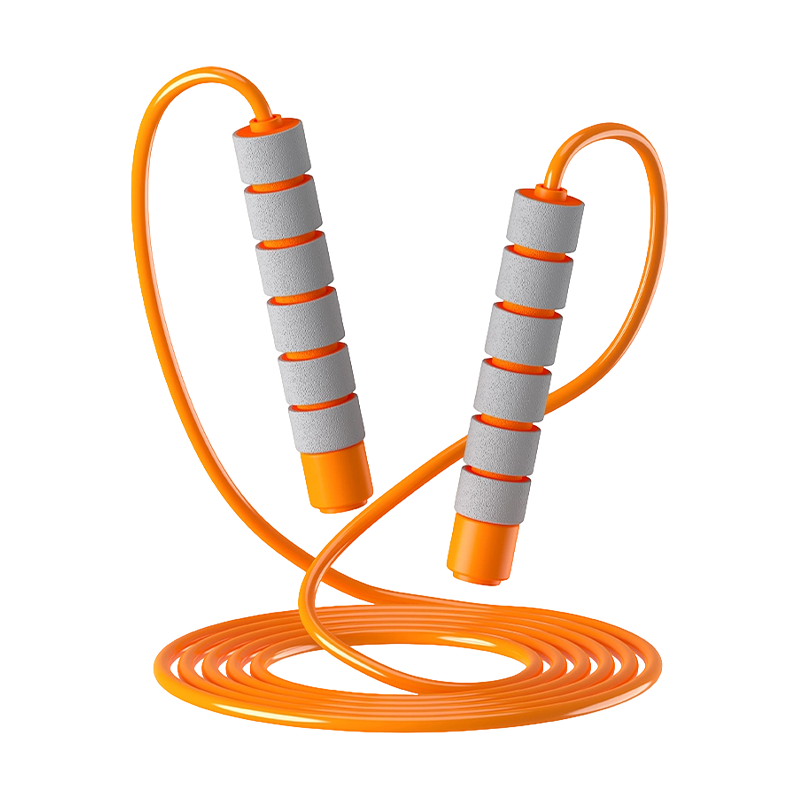
TS-1 PVC Rope Sponge Handle Jump Rope For Children
-
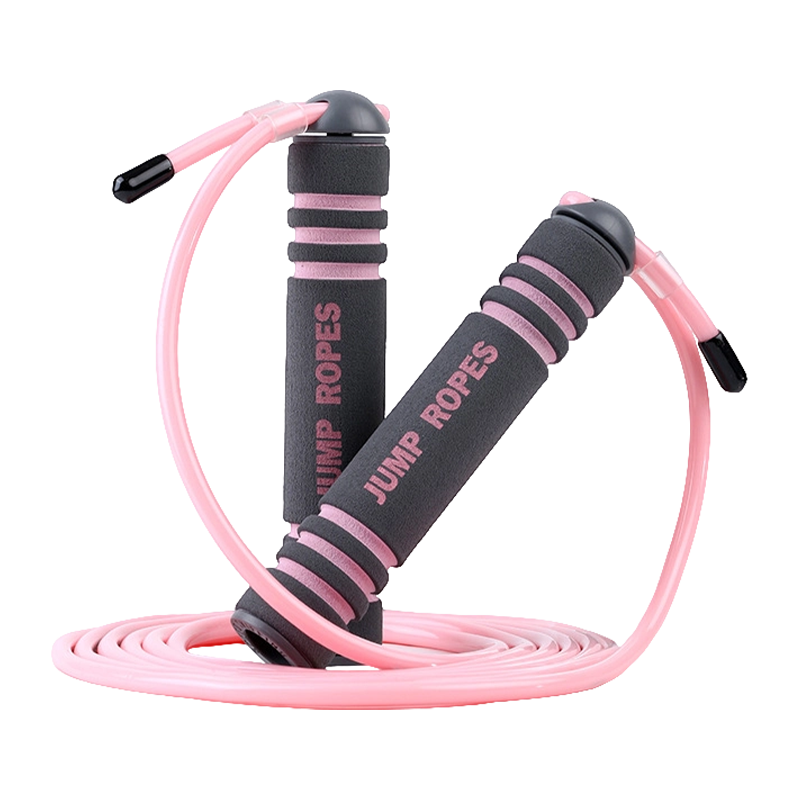
S-17 Sponge Handle Jump Rope For Children
-
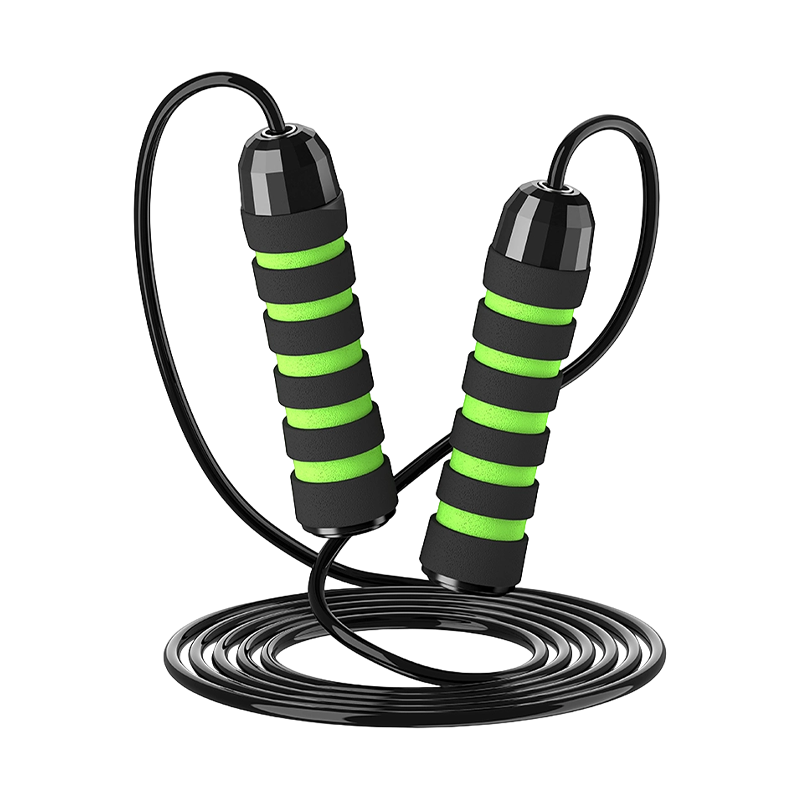
TS-2 5 Slots Sponge Handle Jump Rope For Adults
-
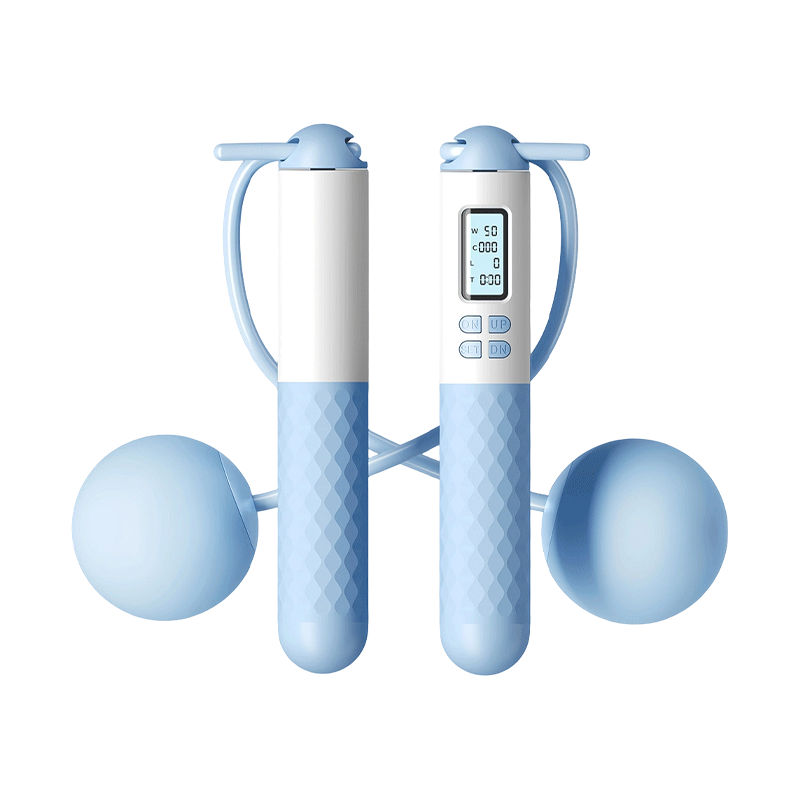
TS-7 ABS Handle Electronic Counting Jump Rope
-
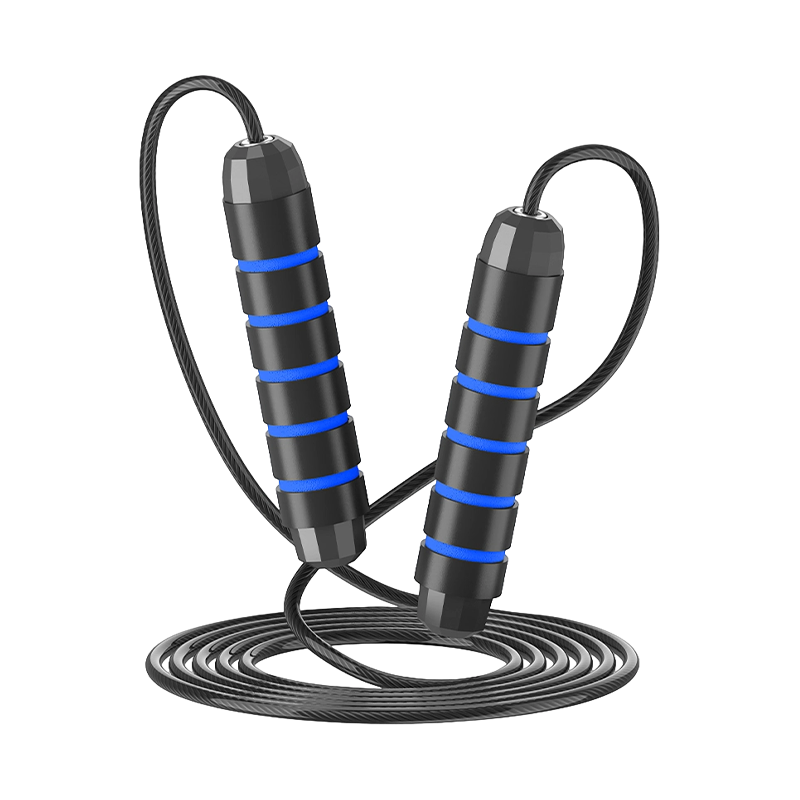
TS-3 Five-Slot Smooth Sponge Handle Jump Rope For Adults
-
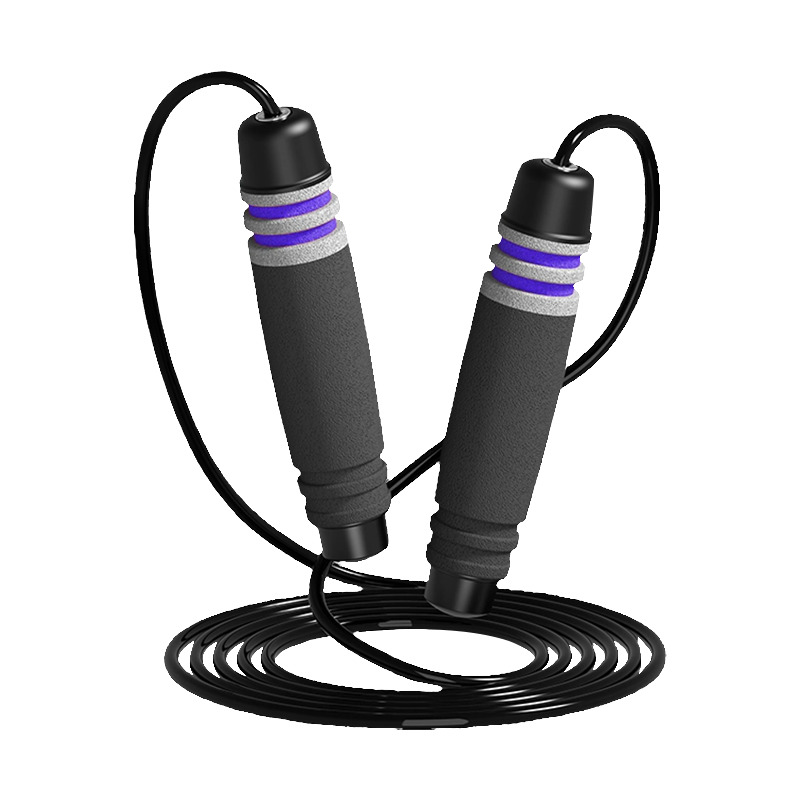
TS-3 Single Head Color/7 Groove Drum Shape Sponge Handle Jump Rope For Adults
News
-
Introduction to Racing Jump Ropes The humble jump rope, once a staple of playground nostalgia and simple cardiovascular warm-ups, has undergone a radical transformation in the mode...
READ MORE -
Discover the Power of Racing Jump Ropes Racing Jump Ropes: Defining the Speed Tool Racing Jump Ropes, often referred to as Speed Ropes, are high-performance fitness tools specifica...
READ MORE -
Introduction Jump rope workouts have long been a staple in fitness routines due to their simplicity and effectiveness. However, with the advent of technology, counting jump ropes h...
READ MORE -
Understanding the Benefits of Rubber Handle Jump Rope for Different Fitness Levels Jump rope is a simple yet highly effective fitness tool that has been gaining popularity in both ...
READ MORE

Contact Us
-

No. 215, Lane 4, Qiaotou Road, Qiaotou Town, Cixi City, Ningbo, Zhejiang Province, China.
-

+86-13867815229
-

Copyright © Cixi Lingdong Electronic Technology Co., Ltd. ALL rights reserved

UP