

 English
 Español
 عربى
عربىThe company adhering to the "customer first and forge ahead" business philosophy, adhere to provide our customers with quality service.
Weighted Jump Rope for Weight Loss: Handle Weights That Build Real Calorie Burn
Weight Loss Training
Weighted Jump Rope for Weight Loss: Where the Extra Weight Actually Helps
Handle mass, rope drag, and the interval pattern that turns a heavier rope into a calorie tool instead of a sore shoulder.
Nine minutes into a session with half-pound handles, most people stop because their forearms quit, not because their lungs did. That single detail explains why the heaviest rope in the bag is rarely the one that burns the most calories. A weighted jump rope raises the cost of every skip and lowers the number of skips you can take in a row, and energy expenditure follows intensity and duration together.
The practical answer comes first: train most of your fat-loss volume with 1/4 to 1/2 lb per handle, keep the 3/4 lb to 1 lb pairs for intervals of 20 to 40 seconds, and treat anything above 1 lb per handle as grip and shoulder conditioning rather than calorie work. The sections below explain why that split holds up in real sessions.
- Sustained calorie burn: 1/4 to 1/2 lb handles, longer intervals with short rests.
- Higher cost per minute: 3/4 lb handles, short hard bursts.
- Above 1 lb: strength and grip work, kept to low total volume.
Why Heavier Does Not Automatically Mean More Calories
At a moderate to fast pace, skipping costs roughly 10 to 16 calories per minute for a 70 kg adult, which puts a clean 25-minute session near 300 calories. Weighted handles push the per-minute figure higher, because you lift more mass with every wrist turn and your upper body contributes more to the movement. The catch is what happens to the clock.
Compare two realistic sessions. Twenty-five minutes with a standard rope at 120 to 130 skips per minute might total around 300 calories. Fifteen minutes with 3/4 lb handles, broken by six or seven grip-driven stops, often lands closer to 180. The heavier rope wins the per-minute contest and loses the session.
InfoThese figures are working ranges, not measurements. Body weight, cadence, landing depth, rope length and rest habits move the number by 20 to 30 percent in either direction.
The mechanism is predictable. Once grip fatigues, most people swing from the elbow instead of the wrist, the rope slows, and the timing slips, which makes landings heavier. The limiter shifts from heart and lungs to a small muscle group that was never going to outlast your cardiovascular system.
The rope that burns the most calories is rarely the heaviest one in the bag. It is the one you are still swinging competently at minute fifteen.
Handle Weight and Rope Weight Are Two Different Tools
Resistance can sit in two places on a rope, and the two do not feel the same in the hands.
Weighted handles
Mass in the handle, from 1/4 lb up to 2 lb per side, loads the grip, forearm and shoulder first. That is genuinely useful if you want a hybrid of cardio and upper-body endurance, and it is why weighted handles feel so productive in the opening three minutes. The trade-off is mechanics: heavy handles encourage elbow-driven swings, which shortens the lever you use and changes how the rope turns.
Weighted rope cores and beaded ropes
Mass or diameter in the rope itself works differently. A thicker PVC core, a weighted cable or a beaded rope resists rotation, so the shoulders and upper back do more work per turn. Tempo drops and the movement moves closer to a power exercise, which suits short bursts and rhythm drills rather than long steady blocks.
Both belong in a well-stocked training bag, but they should not be treated as the same purchase. In our own fat-burning builds, the added mass sits in the handle while the rope keeps its original diameter, so the rope still turns cleanly at speed, which is the design logic behind the TS48 weighted fat-burning rope.
Matching Handle Weight to the Session
Use the ranges below as a starting map, then adjust by how your grip feels at the end of a set rather than by how the rope looks on a shelf.
| Handle weight | Best suited to | What it feels like | Typical set shape |
|---|---|---|---|
| 1/4 lb (about 113 g) | Beginners, steady cardio, learning rhythm | Barely different from a standard rope | 10 to 20 minutes continuous, or 60 s on / 30 s off |
| 1/2 lb (about 227 g) | Main fat-loss work | Slightly slower tempo, more upper body | 30 to 45 s on / 30 s off, 12 to 16 rounds |
| 3/4 lb (about 340 g) | Intervals and conditioning | Noticeably heavy, grip fails first | 20 to 30 s on / 40 to 60 s off, 8 to 12 rounds |
| 1 lb (about 454 g) | Strength endurance, advanced users | Slow and deliberate, elbow-driven | 15 to 25 s bursts, low total volume |
| 1.5 to 2 lb (680 to 900 g) | Grip and arm conditioning, not fat-loss volume | Very slow, often single skips | 10 to 15 s sets with long rests |
DangerStarting your first weighted block with 1 lb handles usually ends the same way: two decent sessions, then a week off with sore wrists. Begin one step lighter than you think you need.
A 20-Minute Weighted Session That Fits a Fat-Loss Week
Weighted work responds better to intervals than to long continuous sets. One session shape that holds up well:
- Warm-up, 3 minutes: easy skipping with a standard rope, alternating 30 seconds of skipping with 30 seconds of marching in place.
- Block 1, 6 minutes: 1/2 lb handles, 30 seconds of work and 30 seconds of rest for 6 rounds, at a rhythm you could hold for 60 seconds if you had to.
- Block 2, 6 minutes: same handles or 3/4 lb, 20 seconds hard and 40 seconds easy for 6 rounds.
- Block 3, 3 minutes: 45 seconds of steady skipping with bodyweight squats during the 15-second rests, 3 rounds.
- Cool-down, 2 minutes: slow skips or walking, then 30 seconds each of calf and forearm stretching.
SuccessThree sessions of this shape per week, with a 5 to 10 percent weekly increase in work time, beats one heroic 60-minute session on a Sunday.
Once 1/2 lb feels comfortable across all three blocks, a heavier upgrade model makes the intensity progression simple without changing the session structure, which is what the TS56 upgrade weight-bearing build was designed for.
Setup Details That Decide Whether You Keep Going
- Length: stand on the middle of the rope and pull the handles up; they should reach roughly your armpits. With a weighted rope, stay at the shorter end of that range, because slower rotation needs less slack.
- Surface: wooden floors, rubber gym tiles and sport courts absorb landings. Concrete and tile send the impact straight up through the ankle and knee.
- Footwear: a thin, flat sole with modest cushioning keeps you close to the ground and preserves the feel of the rope. Thick-heeled running shoes tend to catch it.
- Grip: once hands get damp, rubber handle jump ropes hold far better than smooth plastic, and a secure grip is what lets you relax your forearms between turns.
- Technique: elbows close to the ribs, wrists doing the turning, and jumps of 2 to 3 cm rather than a full hop.
WarningSharp pain at the front of the knee, the Achilles tendon or the arch of the foot is not something to push through. Drop back to a lighter handle, shorten the jumps and check the surface before adding volume again.
What to Track When the Scale Moves Slowly
Daily weigh-ins add noise, not information. A weekly average weight, a waist measurement at the navel, resting heart rate and the number of completed sessions tell a clearer story over four to six weeks. The single most useful entry in that log is whether you finished the intervals you planned, because consistency is what moves total calorie burn.
A counting rope removes the mental tally from the equation, so attention stays on rhythm and breathing. Our notes on counting jump ropes cover how the display, reset behaviour and sensor placement affect day-to-day training. For handling, a 360-degree swivel point keeps the cable from twisting as it loads, which matters more once handles get heavy, and that is the design focus of the TS57 smart counting rope.
What to Check Before You Buy a Weighted Rope
Specification sheets tell you only part of the story. Four things decide whether a weighted rope survives a real training block:
- Declared handle weight per side, and how consistent it is within a batch. A few grams of variation is normal; large swings are not.
- Bearing and swivel quality, since a stiff rotation point transfers twist into the wrist within minutes.
- Rope core: coated steel cable for speed, weighted PVC or beaded segments when you want drag instead of mass in the hand.
- Length adjustment hardware that still holds after a few hundred sessions.
On the production side, handle weight tolerance is the number we control most tightly on weighted models, because a rope that feels different from one month to the next breaks the progression plan built around it.
Weight loss does not come from owning an impressive rope. It comes from a weight you can swing competently for months, intervals that keep your heart rate up without wrecking your grip, and sessions you actually repeat. Start at 1/2 lb, build three weighted sessions a week, keep the heavy pairs for short bursts, and let the weekly averages, not the daily scale, tell you whether it is working.
Related Product
-
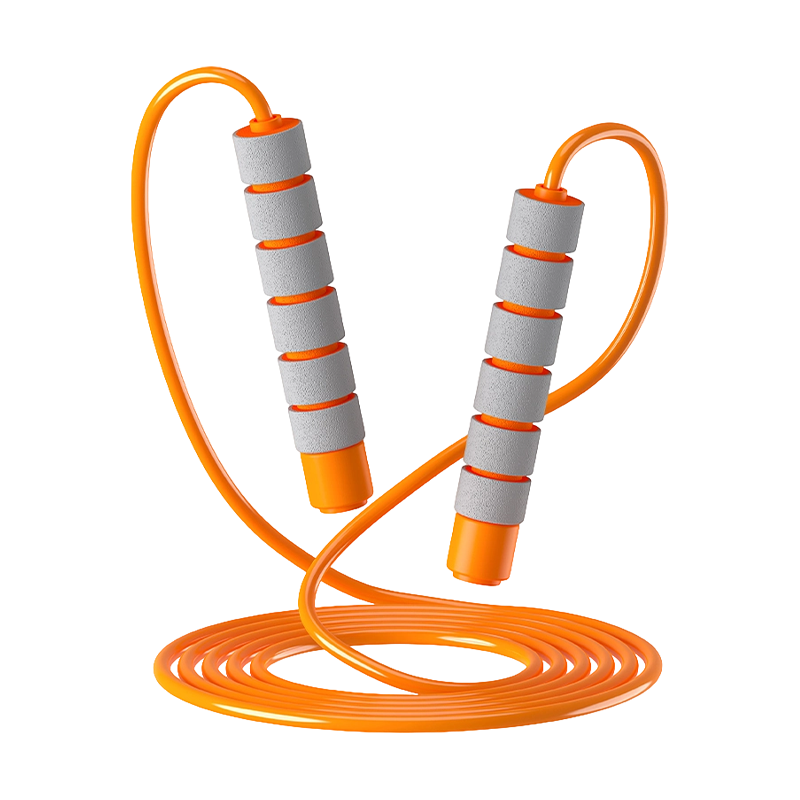
TS-1 PVC Rope Sponge Handle Jump Rope For Children
-
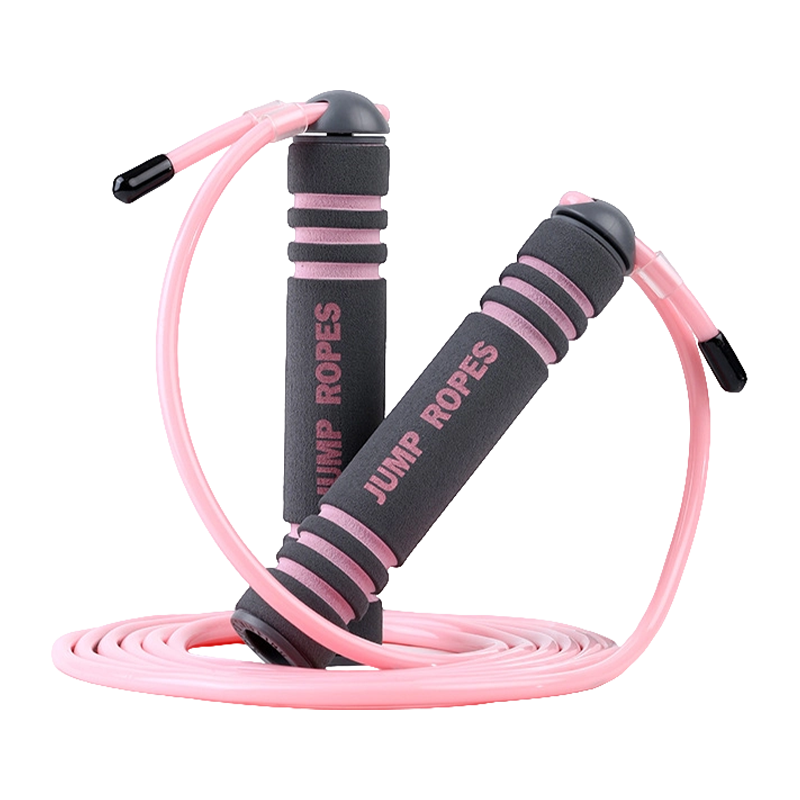
S-17 Sponge Handle Jump Rope For Children
-
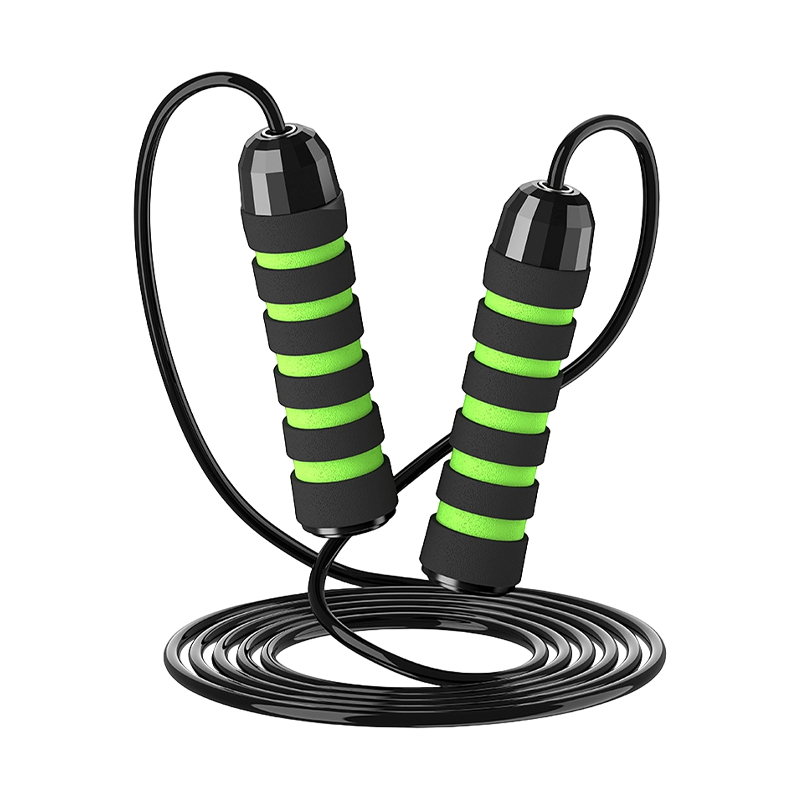
TS-2 5 Slots Sponge Handle Jump Rope For Adults
-
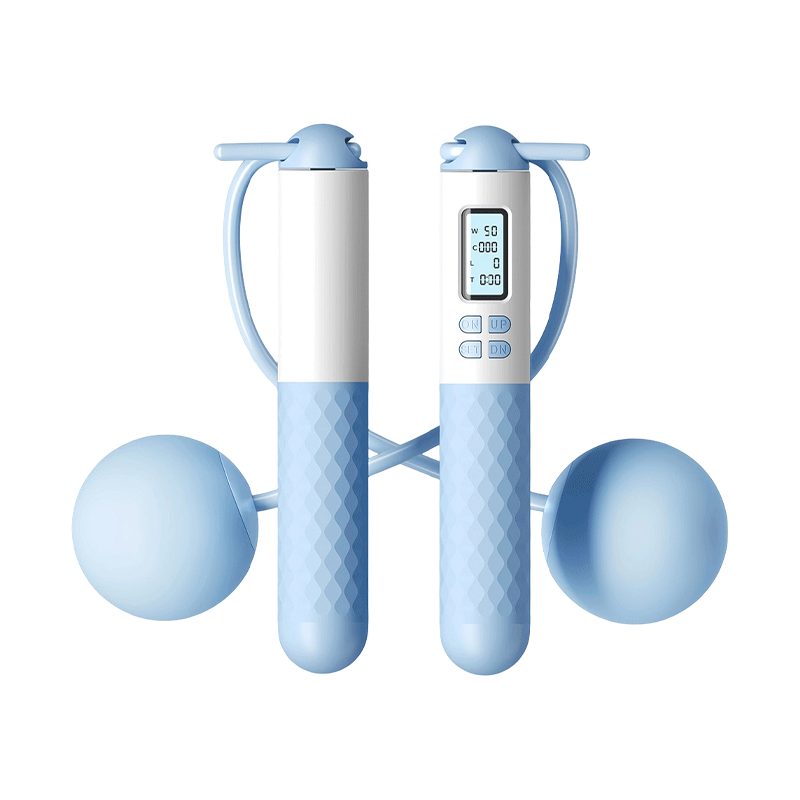
TS-7 ABS Handle Electronic Counting Jump Rope
-
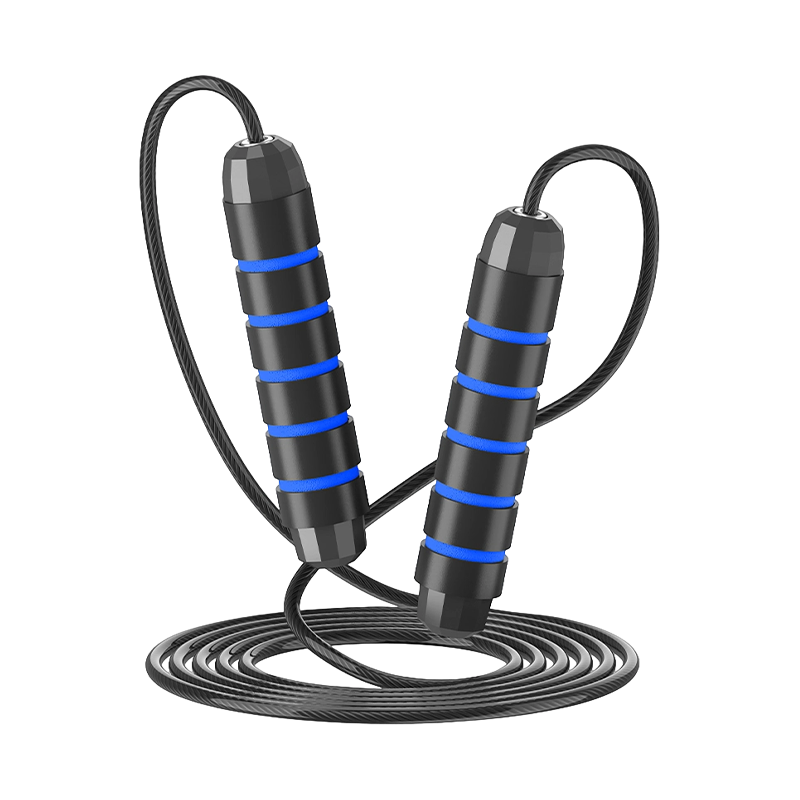
TS-3 Five-Slot Smooth Sponge Handle Jump Rope For Adults
-
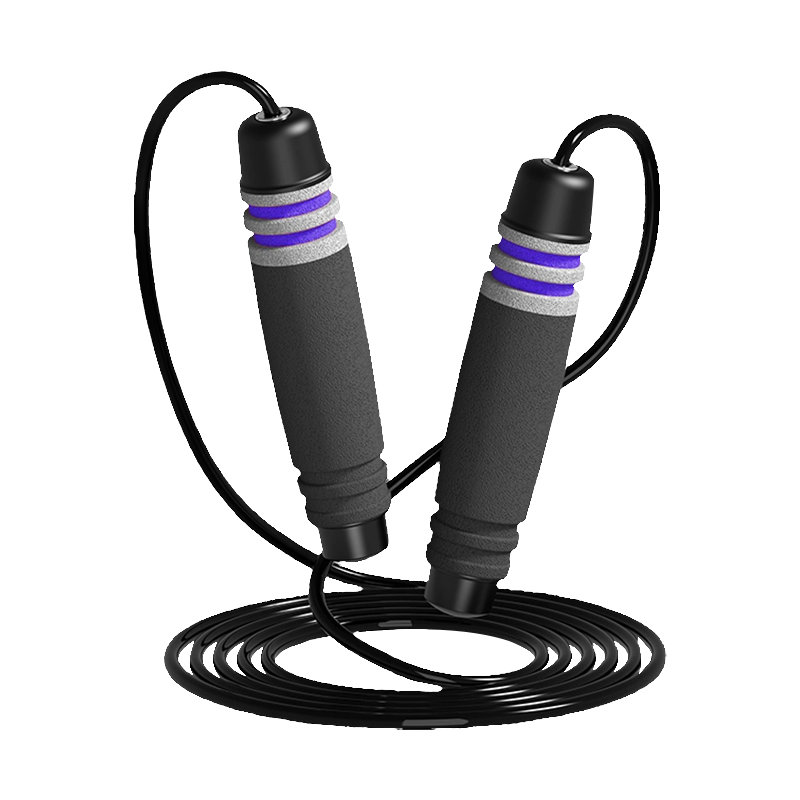
TS-3 Single Head Color/7 Groove Drum Shape Sponge Handle Jump Rope For Adults
News
-
Introduction to Racing Jump Ropes The humble jump rope, once a staple of playground nostalgia and simple cardiovascular warm-ups, has undergone a radical transformation in the mode...
READ MORE -
Discover the Power of Racing Jump Ropes Racing Jump Ropes: Defining the Speed Tool Racing Jump Ropes, often referred to as Speed Ropes, are high-performance fitness tools specifica...
READ MORE -
Introduction Jump rope workouts have long been a staple in fitness routines due to their simplicity and effectiveness. However, with the advent of technology, counting jump ropes h...
READ MORE -
Understanding the Benefits of Rubber Handle Jump Rope for Different Fitness Levels Jump rope is a simple yet highly effective fitness tool that has been gaining popularity in both ...
READ MORE

Contact Us
-

No. 215, Lane 4, Qiaotou Road, Qiaotou Town, Cixi City, Ningbo, Zhejiang Province, China.
-

+86-13867815229
-

Copyright © Cixi Lingdong Electronic Technology Co., Ltd. ALL rights reserved

UP