

 English
 Español
 عربى
عربىThe company adhering to the "customer first and forge ahead" business philosophy, adhere to provide our customers with quality service.
Weighted Jump Rope for Basketball: Choosing Weight, Rope and Handle Grip
Weighted Jump Rope for Basketball: What Actually Transfers to the Court
A working guide for players, coaches, and equipment buyers deciding between shoulder-building resistance and footwork-sharpening speed.
A high school guard picks up a 450 g rope, rips through twenty rotations, and her shoulders burn before her feet feel anything. Ten minutes later, a teammate with a 120 g speed rope is still landing clean double-unders but feels nothing in his arms. Both sessions are useful, and they produce completely different results. That gap is the whole story of choosing a weighted jump rope for basketball.
The short answer comes first: use a weighted rope to build the shoulder, forearm, and grip endurance that fades late in the fourth quarter, and use a light speed rope to sharpen footwork and cadence. One rope rarely does both jobs well. Everything below covers the weight bands, handle choices, rope materials, and programming rules that follow from that split.
What Weighted Rope Work Adds to a Basketball Player
A heavier rope forces the shoulders, wrists, and forearms to produce more force on every rotation. Sustained for 45 to 75 seconds, that turns into shoulder endurance, the quality that keeps shooting form and arm strength stable once a game gets physical. Rope work is also inexpensive conditioning: a 70 kg player burns roughly 10 to 12 calories a minute skipping, close to easy running, except the upper body does real work instead of hanging passively.
What a weighted rope cannot do matters just as much. It will not build lateral quickness, deceleration, or change of direction, and it will not raise maximum foot speed, because extra mass slows every rotation. Heavy rope builds force; light rope builds cadence. Programs that blur those two goals tend to produce players who are strong in the arms and slow on the perimeter.
Treat the weighted rope as a strength tool with a cardiovascular side effect, and the light rope as a rhythm tool with a conditioning side effect. Neither one replaces the other.
Weight Classes: How Heavy Is Too Heavy
Rope weight only means something when length is stated, because mass scales with rope length. A 250 g rope cut at 2.8 m and a 250 g rope at 3.0 m sit differently in the hands, and the handles add their own contribution on top. Total weight, rope plus both handles, is the number worth writing into a purchase order or a training plan.
| Total weight | Typical construction | Best used for | Main risk |
|---|---|---|---|
| 100 to 150 g | 5 mm coated steel wire or light PVC | Speed, double-unders, footwork cadence | Rope sting on bare legs, short service life outdoors |
| 200 to 350 g | 6 to 8 mm PVC with weighted bearings | Conditioning, warm-ups, in-season shoulder work | Forearm and elbow strain at high volume |
| 400 to 700 g | Heavy PVC or a weighted core | Shoulder and grip strength blocks, off-season | Rhythm breakdown, compensations in the jump |
| Plus 100 to 250 g per handle | Aluminum or rubber handles with inserts | Isolated arm and shoulder loading | Wrist strain, requires established technique |
Handle mass changes the feel even more than the total suggests. Heavy handles make a rope slow to accelerate but easy to keep spinning once it is moving, which suits long conditioning sets. A heavy rope paired with light handles whips through the air and demands tighter wrist control, which is useful for advanced players and punishing for beginners.
Quick test: if you cannot hold 60 seconds of unbroken singles at a steady tempo, the rope is too heavy for skill work. Use it in 20 to 30 second bursts until the rhythm holds.
Handle Material and Grip: Where Buying Mistakes Happen
Handle choice decides whether the rope stays in your hands at minute six, so it deserves more attention than the colour of the rope. Aluminum handles stay rigid under load and survive seasons of gym floors, but they are heavier and feel cold outdoors. PP or ABS plastic handles keep weight and cost down. Rubber handles hold their grip once palms get sweaty, which is the most common problem for basketball players training indoors. Sponge and foam handles are the most comfortable for beginners, though they absorb sweat and wear faster.
Two specifications are worth checking before anything is ordered. First, rotation at the handle joint: bearings or a 360-degree swivel reduce rope twist, and a rope that kinks costs rhythm long before your legs give out. Second, handle dimensions, since most adult training handles sit near 140 to 150 mm long and about 20 mm in diameter. A handle that is too thick forces a looser grip and quietly shortens every set.
Rope Material, Length, and Training Surface
Materials behave differently on different floors. Coated steel wire, usually 5 mm, is the fastest option and the one competitive players reach for, but it scuffs fast on abrasive outdoor concrete. PVC ropes are slower, more forgiving, and last longer outdoors. Beaded ropes, the segmented kind used in school programs, are the most forgiving of all, because a mistimed jump rarely ends in a stinging miss.
Length should be set, not guessed. Stand on the middle of the rope: the handle tops should land around the sternum or just below the armpits for general training, and 5 to 10 cm shorter for high-speed work. Team equipment should be adjustable, and the adjustment should still hold after 500 rotations rather than loosening during the second set. The detail on shaving time off each rotation is covered in this guide to mastering rope speed.
Programming Weighted Rope Work Around Practice and Games
The ordering rule matters more than the set count. Heavy rope work goes after skill work, never before shooting drills, because fatigued shoulders change your release and the body memorises the compensation. In season, two short sessions a week are enough. Off season, three is reasonable.
A Simple Four-Step Progression
- Establish a baseline: 60 seconds of unbroken singles with your current rope at a steady tempo.
- Add load, not volume: move to the next weight band only after completing 4 sets of 75 seconds without a rhythm break.
- Split the week: two heavy sessions and two speed sessions, with at least 48 hours between the heavy days.
- Taper before games: stop weighted work 48 hours before tip-off and keep only short, light speed sets.
A workable in-season pattern: heavy rope on Monday after practice, speed rope on Tuesday before skill work, heavy rope again on Thursday, speed rope on Saturday. Total added time is about 20 minutes a week.
If you are equipping a full roster rather than one player, the training jump rope range covers weighted and standard builds in adjustable lengths.
A Sourcing Checklist for Coaches and Equipment Buyers
Team orders and retail lines fail on details that never appear in a product photo. Ask for these in writing before a sample is approved:
- Weight, tolerance, and reference length. A 250 g rope with a stated length and a plus or minus 5 g tolerance is a specification; "heavy rope" is a conversation.
- Handle and bearing type. Confirm 360-degree rotation and whether the joint uses ball bearings or a plain bushing.
- Counter accuracy. If the rope counts jumps, test it at 100 and 500 rotations; drift beyond one percent makes the data useless to players.
- Coating and print durability. Surface coatings and printing should survive a drop test and repeated contact with hardwood.
- Adjustment hardware and sample lead time. Check that length settings do not slip after heavy use, and confirm how long a sample takes.
Do not approve a sample on weight alone. Weigh it at the specified length, jump 100 rotations, and then check for twisting, handle slip, and counter drift.
Because our own lines run from mold making and injection molding through surface finishing and final assembly, buyers usually get one request from us: weight, reference length, and tolerance in the same message. They are a single specification, not three.
Five Mistakes That Slow Players Down
- Using a heavy rope for double-unders. Extra mass destroys cadence; switch to a light wire rope on speed days.
- Jumping on bare concrete with a wire rope. Abrasion kills the coating within weeks; use a mat or move outdoors with PVC.
- Gripping harder instead of relaxing. A tight grip raises forearm fatigue and shortens sets more than rope weight ever will.
- Buying one fixed-length rope for a whole team. Two or three handle sizes fit a roster far better.
- Adding weighted work during a game week. New loading plus competition equals sore shoulders at the wrong moment.
The most expensive mistake is handing an 800 g rope to a player who cannot yet hold a steady rhythm for 60 seconds. That teaches compensation, not strength.
Pick the weight by the goal, the handle by sweat and grip, the rope material by the floor you train on, and the load by the calendar. A player who runs four to five short rope sessions a week, two heavy and two or three light, usually notices shoulder endurance improving within three to four weeks, while cadence work keeps the feet quick through a long season.
The mistake to avoid is treating the rope as a single purchase. Most basketball programs end up with two ropes per player: a heavier one for strength and conditioning blocks, and a light speed rope for footwork work that never gets skipped. That pair, specified properly and replaced once the coating wears, does more for on-court performance than any single rope sold as the all-purpose answer.
Related Product
-
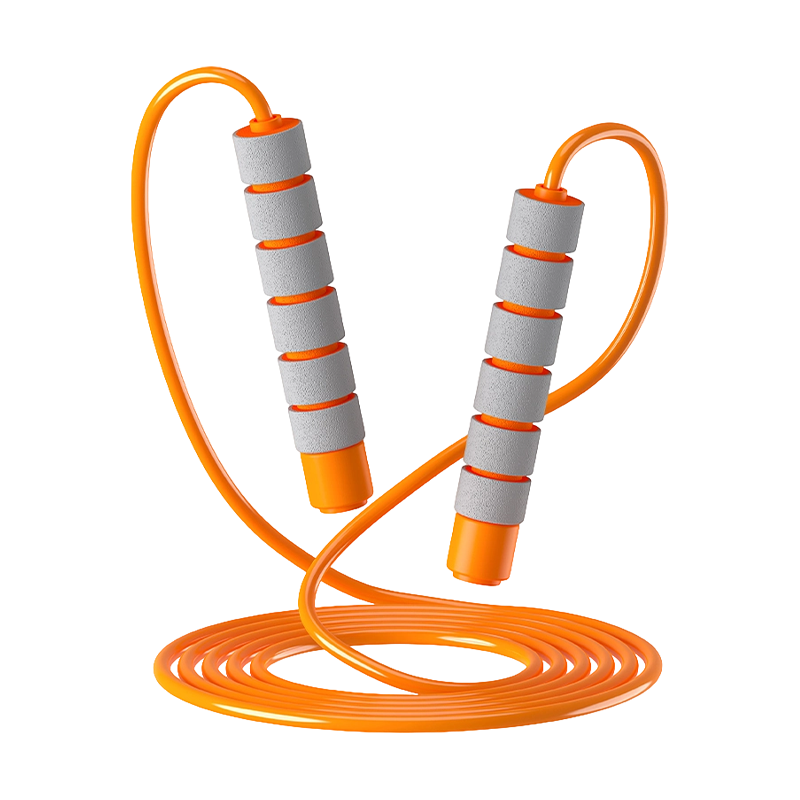
TS-1 PVC Rope Sponge Handle Jump Rope For Children
-
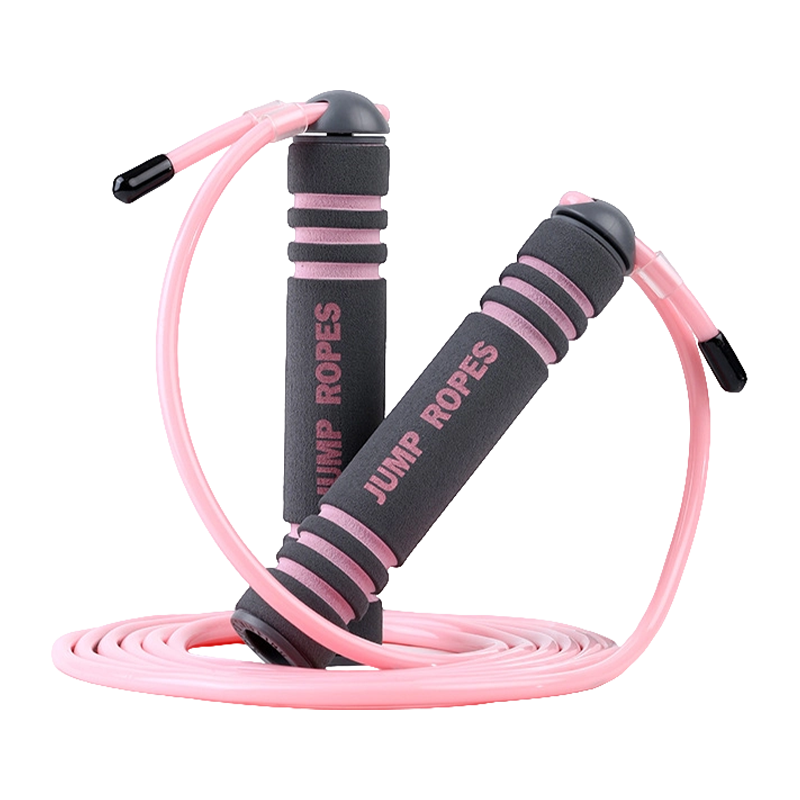
S-17 Sponge Handle Jump Rope For Children
-
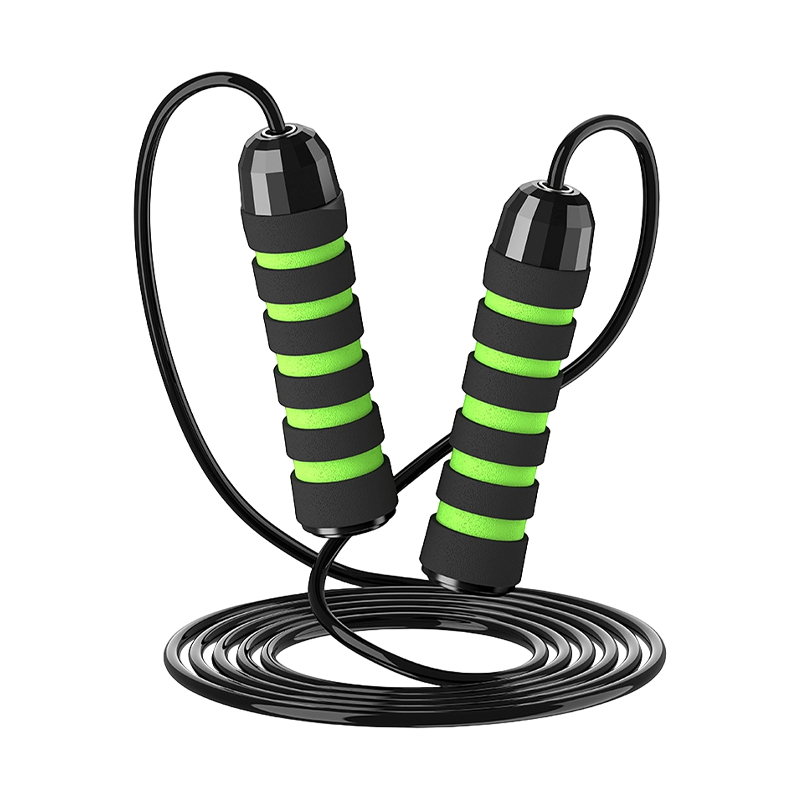
TS-2 5 Slots Sponge Handle Jump Rope For Adults
-
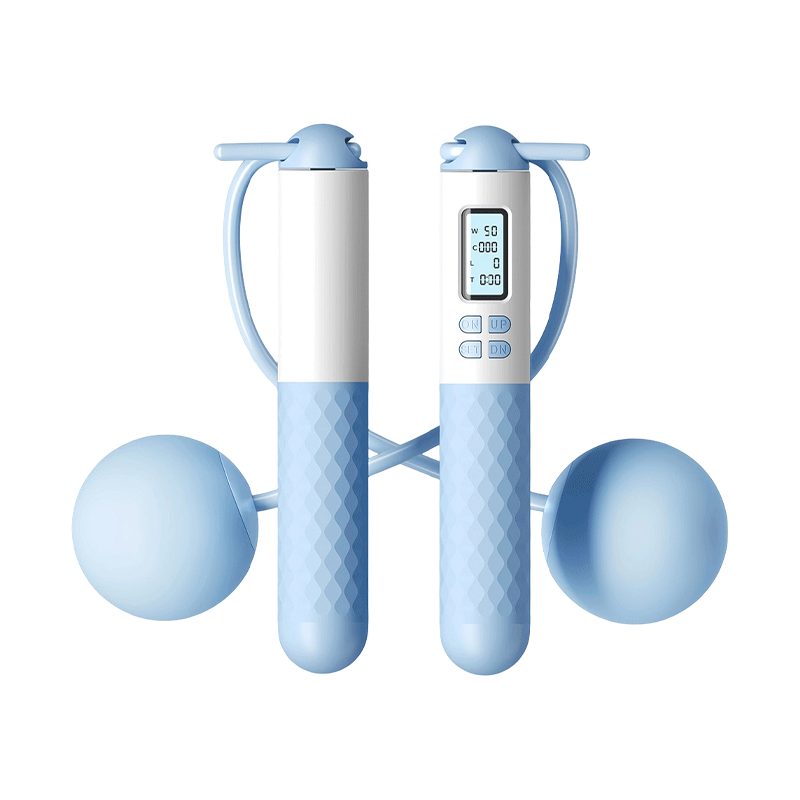
TS-7 ABS Handle Electronic Counting Jump Rope
-
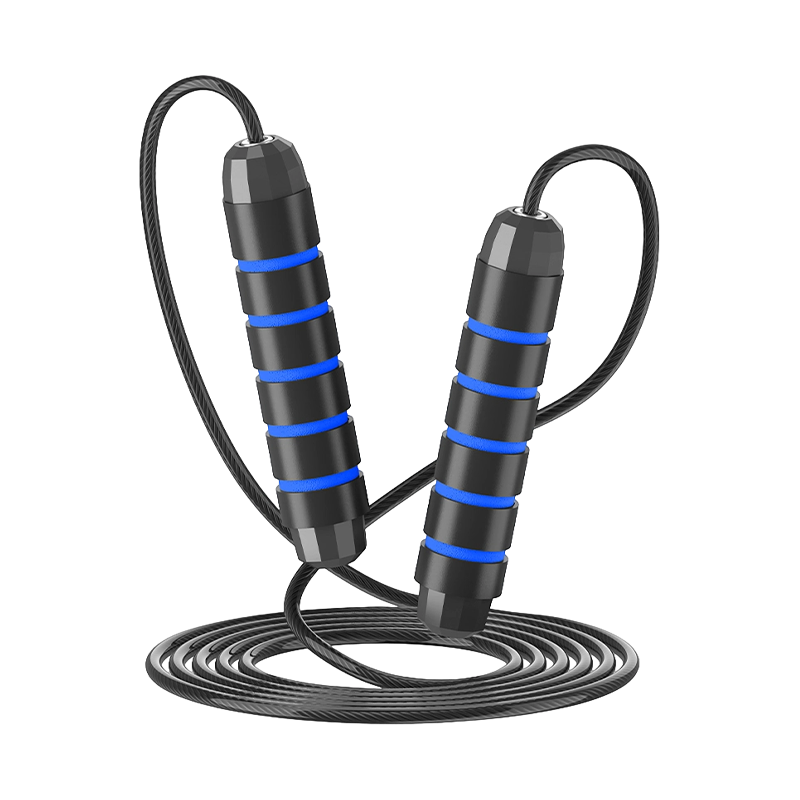
TS-3 Five-Slot Smooth Sponge Handle Jump Rope For Adults
-
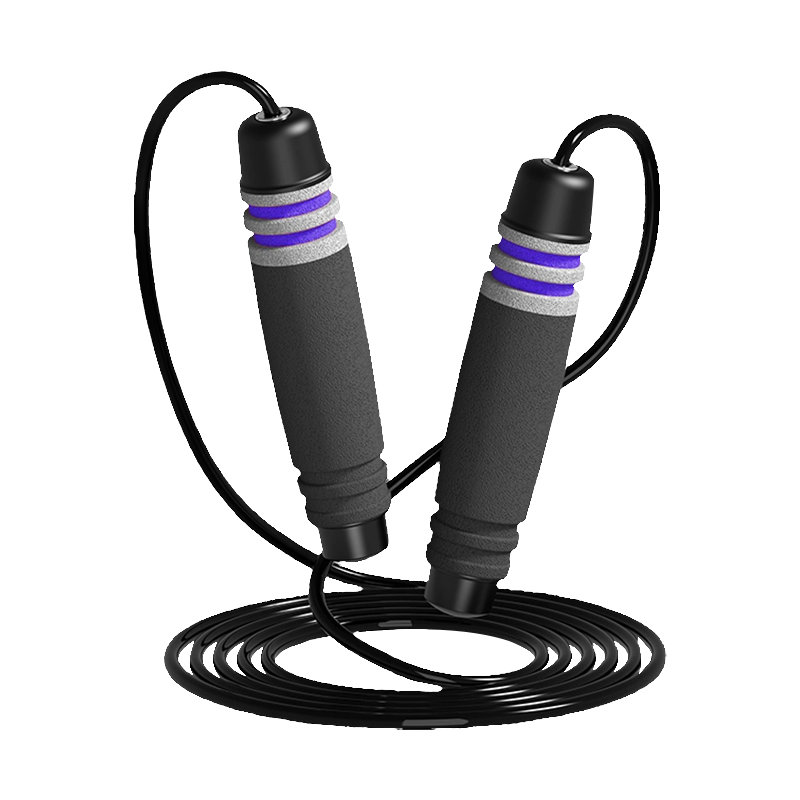
TS-3 Single Head Color/7 Groove Drum Shape Sponge Handle Jump Rope For Adults
News
-
Introduction to Racing Jump Ropes The humble jump rope, once a staple of playground nostalgia and simple cardiovascular warm-ups, has undergone a radical transformation in the mode...
READ MORE -
Discover the Power of Racing Jump Ropes Racing Jump Ropes: Defining the Speed Tool Racing Jump Ropes, often referred to as Speed Ropes, are high-performance fitness tools specifica...
READ MORE -
Introduction Jump rope workouts have long been a staple in fitness routines due to their simplicity and effectiveness. However, with the advent of technology, counting jump ropes h...
READ MORE -
Understanding the Benefits of Rubber Handle Jump Rope for Different Fitness Levels Jump rope is a simple yet highly effective fitness tool that has been gaining popularity in both ...
READ MORE

Contact Us
-

No. 215, Lane 4, Qiaotou Road, Qiaotou Town, Cixi City, Ningbo, Zhejiang Province, China.
-

+86-13867815229
-

Copyright © Cixi Lingdong Electronic Technology Co., Ltd. ALL rights reserved

UP