

 English
 Español
 عربى
عربىThe company adhering to the "customer first and forge ahead" business philosophy, adhere to provide our customers with quality service.
How Heavy Should a Weighted Jump Rope Be? A Complete Guide to Rope Weights
Selecting the Right Load
How Heavy Should a Weighted Jump Rope Be?
The short answer: start with 0.5 to 1 pound (0.23-0.45 kg) if you are new to weighted ropes. The complete answer depends on why you are picking one up, and there are a few simple rules that keep workouts effective without stressing your joints.
If you have ever borrowed a weighted rope thinking it will feel like a slightly thicker speed rope, the first five turns are a wake-up call. The extra mass changes the rhythm, loads the forearms, and can throw off your timing within seconds. That is precisely why the "heaviest possible" approach fails most people. Weighted jump ropes are not a test of strength; they are a training tool that needs to match your goals and technical control.
What the Cable Weight Actually Changes
A traditional speed rope cable weighs somewhere between 80 and 120 grams. A weighted rope typically ranges from 0.25 lb (about 113 g) to 2 lb (about 907 g), with a few specialty ropes going heavier. In practical terms, the weight increases the cable's moment of inertia, which slows the rotation and forces your shoulders, arms, and wrists to generate more force with every turn.
This has three useful effects: a more deliberate rhythm, more upper-body work per revolution, and a higher heart rate over the same number of jumps. But the same physics that make weighted ropes effective also punish poor form. If the load is too high, the rope lags behind your jump, you compensate by hiking your shoulders, and the landing gets heavier.
Weight Ranges by Goal and Experience
Rather than a single number, think of weight bands. The following table is a practical starting point based on the most common training goals we see from athletes, coaches, and wholesale buyers.
| Goal | Starting cable weight | Why this range works |
|---|---|---|
| General fitness / beginner | 0.25-0.5 lb | Builds rhythm and coordination without overloading the shoulders. |
| Steady-state cardio | 0.5-1 lb | Adds enough resistance to raise the heart rate while keeping jumps smooth. |
| Strength-endurance / upper-body emphasis | 1-2 lb | Forces the forearms and shoulders to work harder; use shorter intervals. |
| Speed and footwork practice | 0.25-0.5 lb | Allows quick wrist flicks and repeated corrective jumps. |
| Children or low-impact needs | Below 0.25 lb | Protects joints while teaching basic skipping mechanics. |
The handle weight also counts. A rope with heavier handles may feel more substantial at the same cable weight, but it changes the balance point and wrist load. When in doubt, choose a rope where the cable does most of the work and the handles remain light enough to control the rotation smoothly. If you are curious about why so many athletes are adding weighted jumps to their routine, our post on the fitness jump rope craze covers the broader trend.
Info: A 0.5 lb cable weighs about 227 grams. That is roughly 2.5 times the weight of a standard speed rope cable.
Signs You Have Gone Too Heavy
The rope should be the resistance tool, not the entire workout in itself. If you experience any of these during the first minutes, size down:
- Wrist or elbow discomfort before your breathing feels challenged
- Shoulders creeping up toward your ears within two minutes
- A short, choppy arm swing instead of a smooth circular turn
- Repeatedly landing flat-footed or falling out of rhythm
- A red mark on your legs from the rope constantly clipping the floor
"Choose the heaviest rope you can control, not the heaviest you can swing for one set."
This is not a cautionary slogan. It is the difference between a workout that develops coordination and one that teaches you to compensate with poor posture. Once you find a weight you can handle for 10 minutes without losing form, you can progress to a heavier rope in small increments.
Warning: Do not start with a 2 lb rope if you have never used a weighted rope before. The risk of shoulder strain, tennis elbow, and sore calves is high, and the recovery time can spoil an otherwise good training streak.
Rope Design Affects the Safe Heaviness
Weight alone does not tell you how a rope will feel. The cable diameter, handle length, and bearing quality all determine how much effort it takes to turn the rope. For example, a 1 lb PVC rope and a 1 lb steel-body rope feel completely different because the PVC cable bends and flexes more than a coated steel cable.
Look for a smooth ball-bearing or fixed-pin swivel that lets the rope rotate freely. A good swivel reduces wrist strain even with a heavier cable. You should also check that the handles are long enough to grip without squeezing your fingers into a cramped position.
If you are evaluating options for your own training line or a retail assortment, a well-designed fat-burning rope with a manageable starting weight can fill the gap between basic speed ropes and specialty heavy cables.
Danger: If you feel numbing or tingling in your fingers during a weighted rope workout, stop immediately. That signal is not just fatigue; it may indicate nerve compression from grip strain.
A Simple Progression from Light to Heavy
Treat weighted ropes like any loaded movement: add resistance gradually so your tendons and coordination can adapt.
- Week 1-2: use a 0.25-0.5 lb rope for 3 sessions of 8-10 minutes, focusing on consistent turns.
- Week 3-4: move up to 0.5-0.75 lb, if the lighter weight feels easy, and keep sessions to 10-12 minutes.
- Week 5-6: introduce a 1 lb rope once you can complete 12 minutes with near-zero misses.
- Week 7+: spend no more than two consecutive sessions at 1 lb, and alternate with lighter ropes to keep footwork sharp.
This progression is intentionally conservative. Weighted ropes tax the upper body differently than unweighted ones, and the forearm muscles need time to catch up with your conditioning.
What to Check Before You Buy in Bulk
For wholesale buyers, the same principle applies but at a specification level. If you are sourcing weighted ropes for a retail brand or a fitness club, check four things: the actual cable weight, the handle balance, the swivel smoothness, and the length adjustment mechanism.
Reputable manufacturing partners can supply ropes in weight increments that match the categories above. Ask for a sample batch and measure the cable weight yourself, because "weighted" without a number is not a spec. Also test whether the rope maintains its shape after repeated jumping; low-cost fillers can compress, making the rope feel softer than the stated weight.
For a reliable benchmark, a sturdy rubber-handle weighted rope at a moderate weight is often the safest choice for general customers. It provides a slightly heavier feel without introducing the tendon stress of a hard steel body.
The honest answer to "how heavy should a weighted jump rope be" is: heavy enough to feel the resistance, light enough to keep your technique clean. For most adults, that means 0.5 to 1 pound as a starting window. Choose a rope with smooth bearings and a length you can adjust, then let your skill level decide when it is time to go up. If you are sourcing for a brand or retail channel, work with a supplier who can differentiate cable weights and handle designs, because the market for weighted ropes is not one-size-fits-all.
Success criteria: You have the right weight when you can complete a 10-minute session with controlled arm circles, quiet landings, and no wrist pain the next day.
Start where the math makes sense: 0.5 lb for rhythm, 1 lb for strength, and well below that for beginners who still need to build the pattern. You can always go heavier next month. You cannot unlearn a sloppy turning pattern that started because the rope chose the weight for you.
Related Product
-
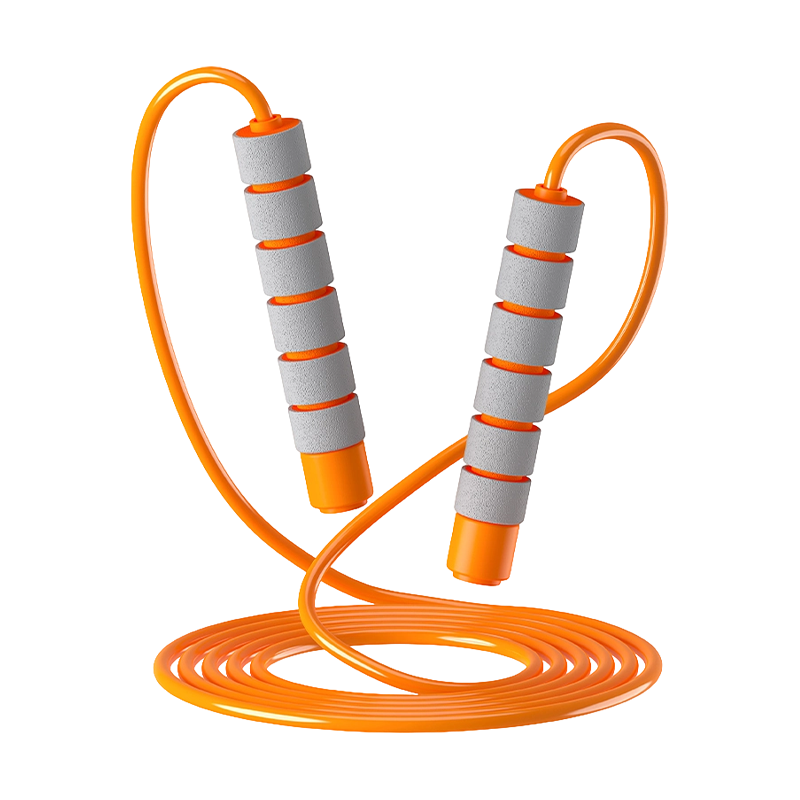
TS-1 PVC Rope Sponge Handle Jump Rope For Children
-
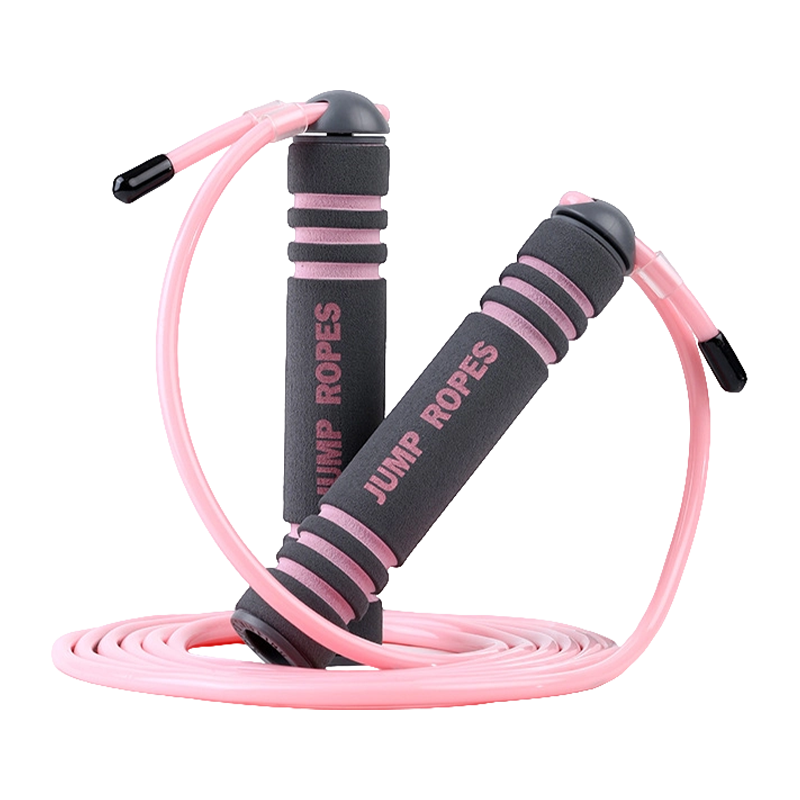
S-17 Sponge Handle Jump Rope For Children
-
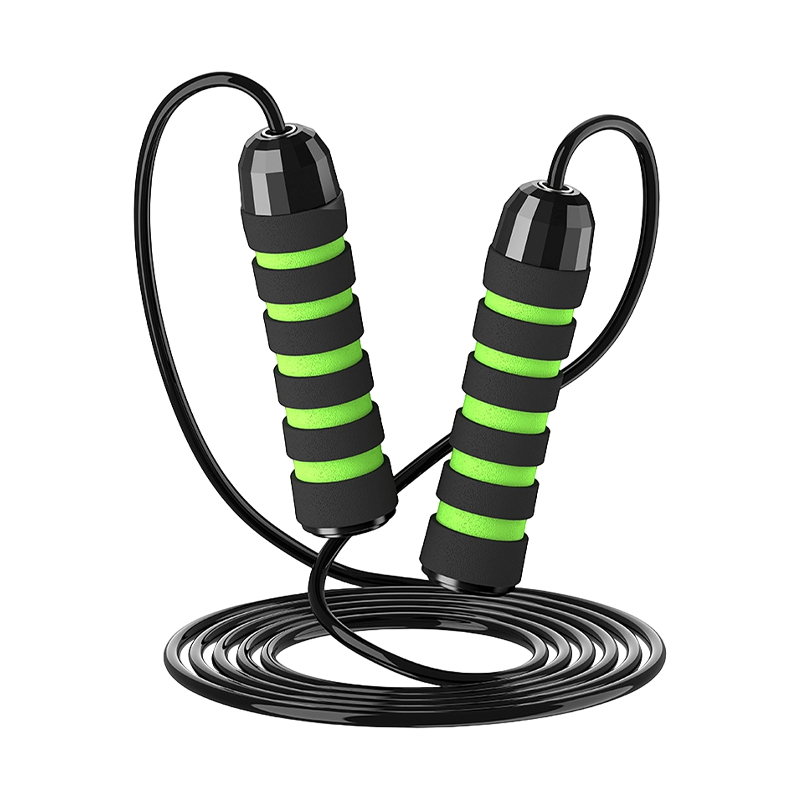
TS-2 5 Slots Sponge Handle Jump Rope For Adults
-
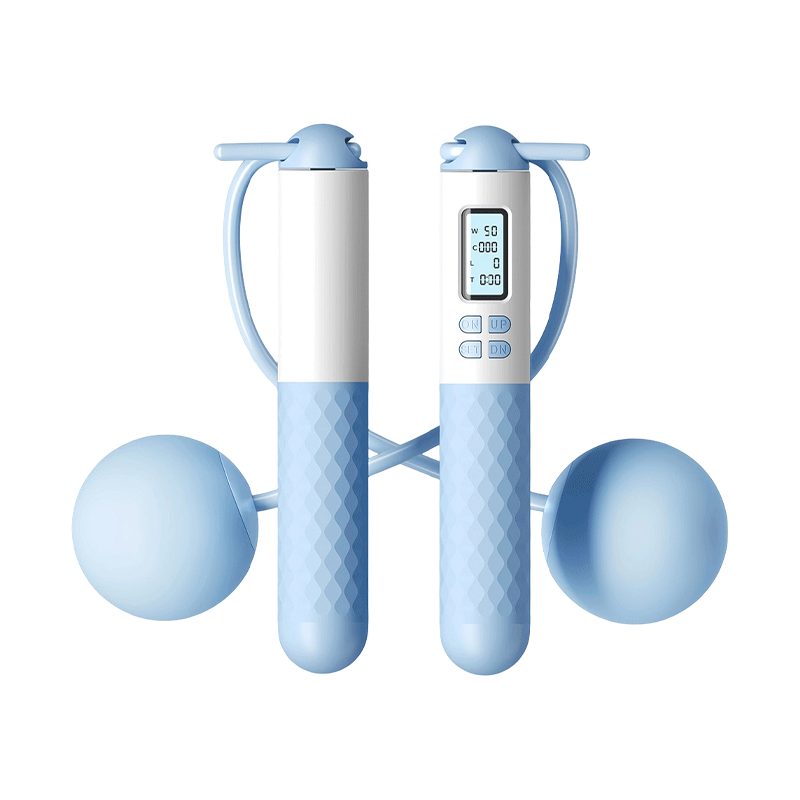
TS-7 ABS Handle Electronic Counting Jump Rope
-
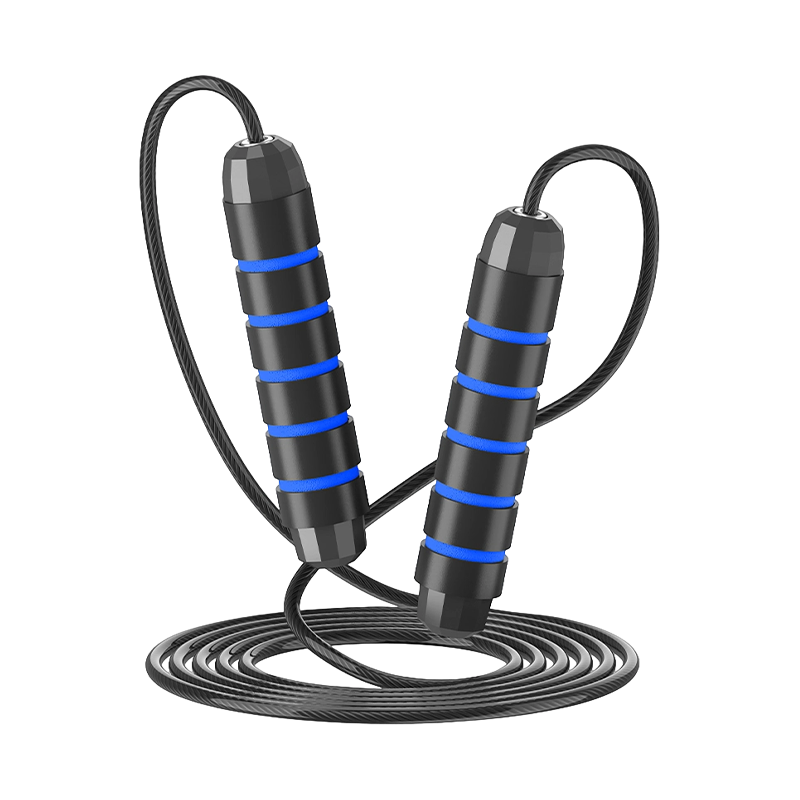
TS-3 Five-Slot Smooth Sponge Handle Jump Rope For Adults
-
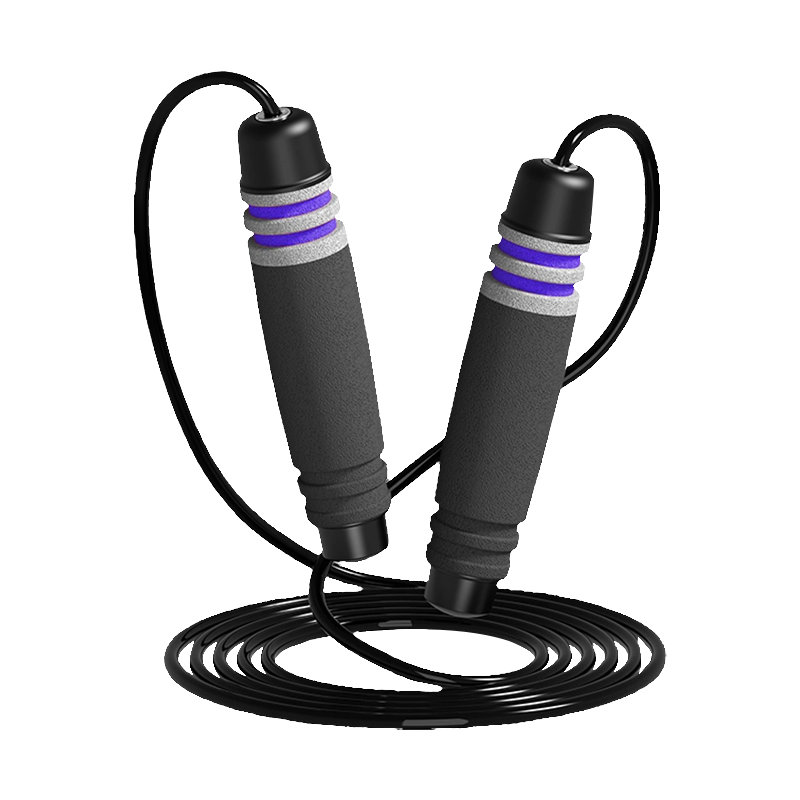
TS-3 Single Head Color/7 Groove Drum Shape Sponge Handle Jump Rope For Adults
News
-
Introduction to Racing Jump Ropes The humble jump rope, once a staple of playground nostalgia and simple cardiovascular warm-ups, has undergone a radical transformation in the mode...
READ MORE -
Discover the Power of Racing Jump Ropes Racing Jump Ropes: Defining the Speed Tool Racing Jump Ropes, often referred to as Speed Ropes, are high-performance fitness tools specifica...
READ MORE -
Introduction Jump rope workouts have long been a staple in fitness routines due to their simplicity and effectiveness. However, with the advent of technology, counting jump ropes h...
READ MORE -
Understanding the Benefits of Rubber Handle Jump Rope for Different Fitness Levels Jump rope is a simple yet highly effective fitness tool that has been gaining popularity in both ...
READ MORE

Contact Us
-

No. 215, Lane 4, Qiaotou Road, Qiaotou Town, Cixi City, Ningbo, Zhejiang Province, China.
-

+86-13867815229
-

Copyright © Cixi Lingdong Electronic Technology Co., Ltd. ALL rights reserved

UP